Daily Number Focus
Users can follow result movement through recent numbers, repeating endings, changing pairs, and sequence shifts that may help highlight interesting combinations.
5D prediction has become one of the most discussed number-based lottery topics among users who enjoy following result movement, observing recurring patterns, and comparing number sequences over time. In India, interest in number prediction continues to grow because many users prefer a format that feels direct, trackable, and easy to review on mobile.
Instead of looking at isolated numbers without context, many users prefer to follow 5D prediction through charts, recent results, repeated combinations, changing sequences, and number behavior across multiple result periods. A structured prediction page helps users stay focused on the information that matters most: which numbers are appearing, which groups are shifting, and which result trends deserve closer attention.
This homepage brings together a broader view of 5D prediction for Indian users who want a clean, readable, and organized experience. Whether the interest is in recent results, possible number combinations, pattern observation, or number trend comparison, the purpose remains the same: to make lottery prediction content easier to explore and easier to follow.
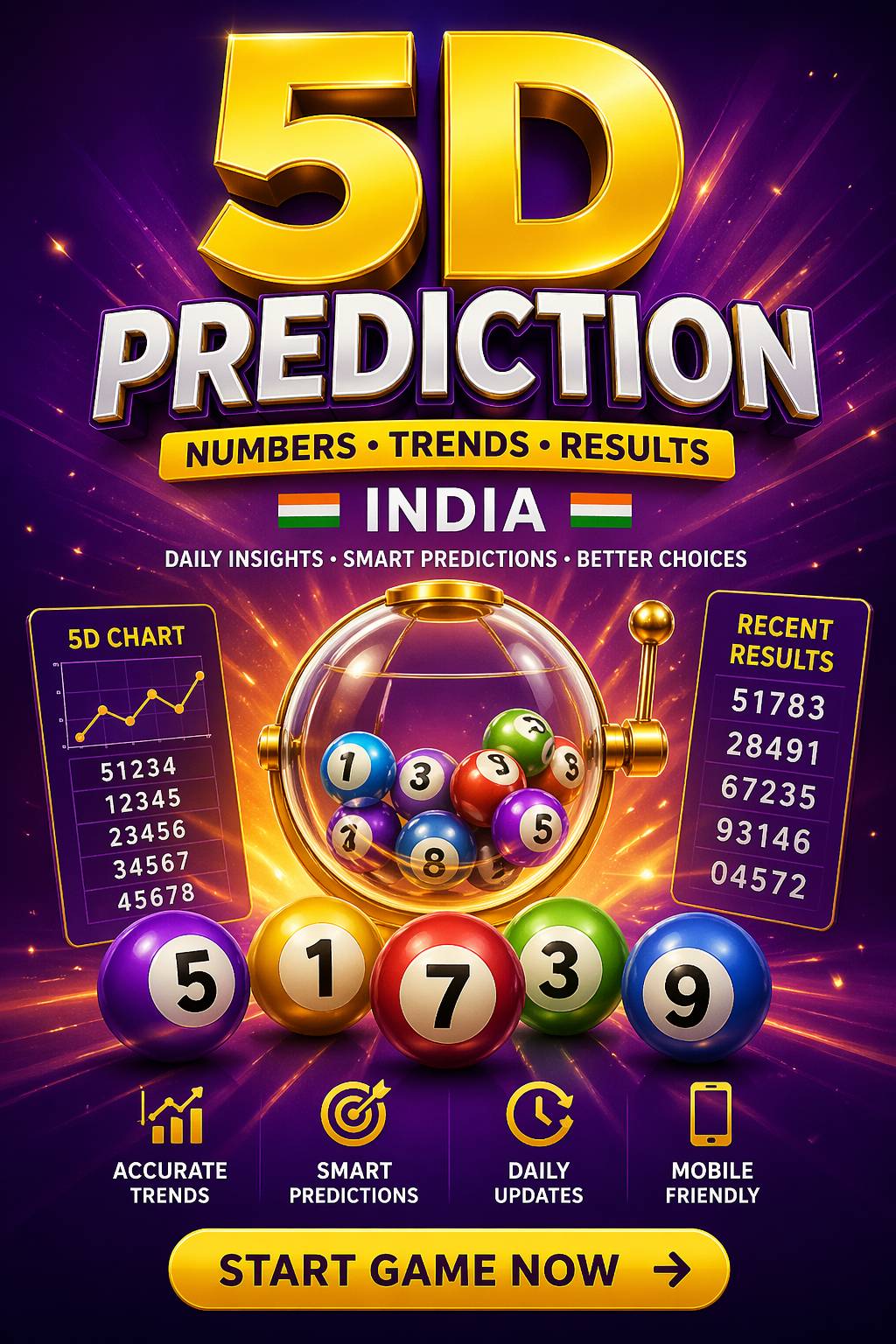
5D prediction is commonly understood as the observation of five-digit number outcomes, the comparison of previous results, and the attempt to identify possible directions in future number movement. It appeals to users who prefer looking at sequence behavior rather than depending entirely on impulse. For many lottery followers, prediction content becomes more useful when it is built around numbers, trends, repeat cycles, and visible changes from one result period to another.
The attraction of 5D prediction lies in its balance between simplicity and depth. On the surface, the idea is easy to understand: users watch number results and examine how digits appear across recent draws. At a deeper level, however, many users begin comparing number positions, repeated endings, mirrored digit groups, high-frequency combinations, and pauses between appearances. This turns a simple result list into something much more engaging.
Among Indian users, 5D prediction is often followed as part of a daily routine. Some users review results in the morning, some compare number history in the afternoon, and others prefer checking updated trends before taking another look at possible combinations. This continuous interaction is one of the reasons prediction content needs to be clear, layered, and easy to browse.
A good 5D prediction homepage should not feel empty. It should provide a full picture of how number patterns can be observed, why result movement matters, and how users typically review predictions in a practical way. That includes looking at recent numbers, watching trend changes, noting repeated digit blocks, and comparing shorter and longer cycles of result behavior.
India has a large mobile-first user base, and this has shaped how lottery-related content is consumed. People want quick access, readable result pages, and number information that does not require long searching. 5D prediction fits naturally into this behavior because it is easy to view on a phone and easy to revisit multiple times during the day.
Another reason for the popularity of 5D prediction is that many users enjoy patterns. Number repetition, last-digit movement, mirrored sequences, ascending and descending structures, and recurring pairs give users something concrete to follow. This makes the experience feel active rather than passive. Users are not simply waiting for a result; they are reviewing a number story that keeps changing over time.
Indian users also tend to appreciate pages that combine quick readability with richer detail. Some visitors want only a fast look at recent number behavior, while others want to spend more time studying charts, combinations, and older result patterns. A stronger homepage serves both styles. It gives enough information for immediate interest while also offering enough depth for users who like to review trends more carefully.
In many cases, users are not interested in one random number alone. They want to understand why a group of digits may be interesting, whether certain endings have appeared too often, whether number blocks are beginning to repeat, and how current results compare to previous sets. This type of observation is exactly what makes 5D prediction content so engaging for a broad audience.
Users can follow result movement through recent numbers, repeating endings, changing pairs, and sequence shifts that may help highlight interesting combinations.
Many users prefer to review number history and compare how different digit positions behave over short and long result cycles.
Looking at recent results side by side makes it easier to notice repetition, absence, rotation, and the return of specific number groups.
A large share of Indian traffic comes from mobile users, so prediction pages should be easy to scan, clear in layout, and fast to revisit.
Different users follow 5D prediction in different ways, but most habits fall into a few familiar patterns. Some users start with the newest result and work backward, trying to understand how current number behavior compares to earlier outcomes. Others begin with their preferred digit groups and then look for supporting patterns in recent history. A third group pays more attention to broader movement and looks for repeated structures rather than specific exact numbers.
One common approach is position-based review. In this method, users observe the first digit, second digit, middle digit, and later positions separately. This can reveal patterns that may not be obvious when looking only at the full five-digit result. For example, a number ending may show repeated behavior even when the full number changes each time. Similarly, middle-digit repetition can sometimes become a key point of focus for users who compare multiple result periods.
Another common approach is group comparison. Here, users watch pairs, triples, or endings. Repeated pairings often attract attention because they can appear in different positions and still feel connected. Triple-digit themes also matter to many users because they can create a sense of structure within apparently changing results. When these smaller groups are tracked over time, users may feel they are building a more informed view of the lottery pattern landscape.
Some users are more comfortable with trend reading than exact-number selection. They want to know whether numbers are moving toward higher ranges, whether repeated endings are getting weaker or stronger, or whether certain digit families are returning after a pause. This broader way of reading prediction content is especially useful for people who want a more balanced view instead of reacting too quickly to a single outcome.
| Prediction Area | What Users Look At | Why It Matters |
|---|---|---|
| Recent Results | Newest five-digit outcomes and their order | Helps users begin with the most current number movement |
| Number Trends | Repeated digits, popular endings, changing frequency | Gives a broader view of result behavior |
| Pairs and Groups | Recurring two-digit and three-digit combinations | Useful for spotting smaller patterns inside bigger results |
| Charts | Visual presentation of number appearance and gaps | Makes it easier to compare movement quickly |
| Historical Review | Older result sequences and return cycles | Shows whether a result pattern may be repeating |
| Daily Observation | Short-term number shifts and recent result rhythm | Supports users who follow prediction regularly |
A stronger lottery homepage should not limit users to one narrow style of prediction. Some people care about recent results first, others care about charts, and others want an overview of repeated number movement. Bringing all of these into a single page creates a fuller prediction experience and helps users feel that the page offers something more than a simple list of numbers.

Number movement is one of the strongest reasons users keep returning to prediction pages. A result is never viewed alone for long; it immediately becomes part of a larger story. Users compare it against previous numbers, identify what has changed, and ask whether the new result supports or breaks the latest trend.
Some trends are visible through repeated endings. Others show up in digit families that continue appearing even when their exact order changes. Users may also observe whether the overall result profile is becoming more balanced, more clustered, or more scattered. These details help transform a simple result page into an active prediction space.
The more clearly a page presents number movement, the easier it becomes for users to keep comparing, reviewing, and refining their own impressions.
Repetition is central to how many users understand lottery prediction. When a digit returns again and again, it often becomes a point of focus. When a popular ending vanishes for several result periods and then returns, it can attract even more attention. This process of watching appearance, disappearance, and reappearance gives 5D prediction much of its energy.
Users often keep an eye on repeated endings because endings are easier to remember and compare quickly. A result page that makes these repetitions easier to notice becomes more useful for day-to-day observation. Similar interest applies to repeating openings, center-digit movement, and number families that seem to stay active across different result periods.
Repetition does not mean certainty, but it does create patterns worth following. Some users note how many result periods a digit has stayed active. Others observe whether repeated pairs are beginning to weaken or whether a less active group might be ready to return. This layered form of observation is one reason prediction content keeps users engaged for longer than a plain result list ever could.
A good homepage should reflect this habit by treating results as connected rather than isolated. When results are presented as part of a visible pattern environment, users are more likely to stay, compare, and explore deeper sections of the site.
Many users do not view 5D prediction as a matter of single numbers only. Instead, they think in groups. A pair may be interesting because it has appeared in multiple different results. A three-digit block may attract attention because it is rotating through different positions. Even when the full five-digit result changes, these smaller pieces can still suggest continuity in number behavior.
This is why group-based reading remains such an important part of lottery prediction. It helps users see connections between results that may otherwise look unrelated. A number family can stay relevant without appearing in exactly the same full sequence every time. Over longer periods, users may feel that these smaller repeated patterns are among the most useful signals available.
Group-based thinking also makes the prediction experience more flexible. Rather than focusing on only one exact result, users can work with several related combinations. That can make daily result tracking feel broader, more informed, and more interesting over time.
A short-term review focuses on the newest results, immediate repetitions, recent endings, and fast-changing number rhythm. This style is useful for users who check prediction pages frequently.
Mid-range comparison helps users see whether a pattern is strengthening, fading, or changing shape across several result periods. It creates a more stable view than relying on one or two outcomes alone.
A longer pattern view gives more room for recurring number families, repeated endings, and delayed returns to become visible. This approach is often preferred by users who want a wider number perspective.
In India, a large number of users explore lottery and prediction content through smartphones. That changes what they expect from a homepage. They want fast access to result-focused information, clear headings, readable number content, and smooth movement between sections. A page that is hard to scan or overloaded with disorder can quickly lose attention.
Mobile users often return to the same prediction page more than once a day. Because of this, the homepage should feel comfortable for quick revisits. Important sections should be easy to spot, and the main ideas should remain clear even during a short visit. Result trends, number groups, comparison sections, and common questions should all be simple to access without confusion.
Another reason mobile matters is consistency. Users may check results during travel, during breaks, or late at night. A clean prediction homepage supports these habits by presenting number information in a way that is easy to absorb without unnecessary effort.
Historical results remain a major foundation of 5D prediction. Without a broader result history, users have much less context for understanding the present. History shows whether certain digit groups are returning, whether patterns are becoming more frequent, and whether the latest result fits into a longer sequence or breaks away from it.
For some users, history is useful because it helps them notice repeat cycles. A digit may disappear for a period, then return strongly. A popular ending may cool down, then come back. Certain pairs may look inactive until a fresh result gives them relevance again. Historical review gives weight to these observations and helps users avoid overreacting to one recent result alone.
The longer the review period, the more interesting these patterns can become. Some results only appear meaningful when compared over a larger sequence. That is why strong prediction content usually combines current results with a wider pattern view rather than treating every outcome as a separate event with no connection to earlier movement.
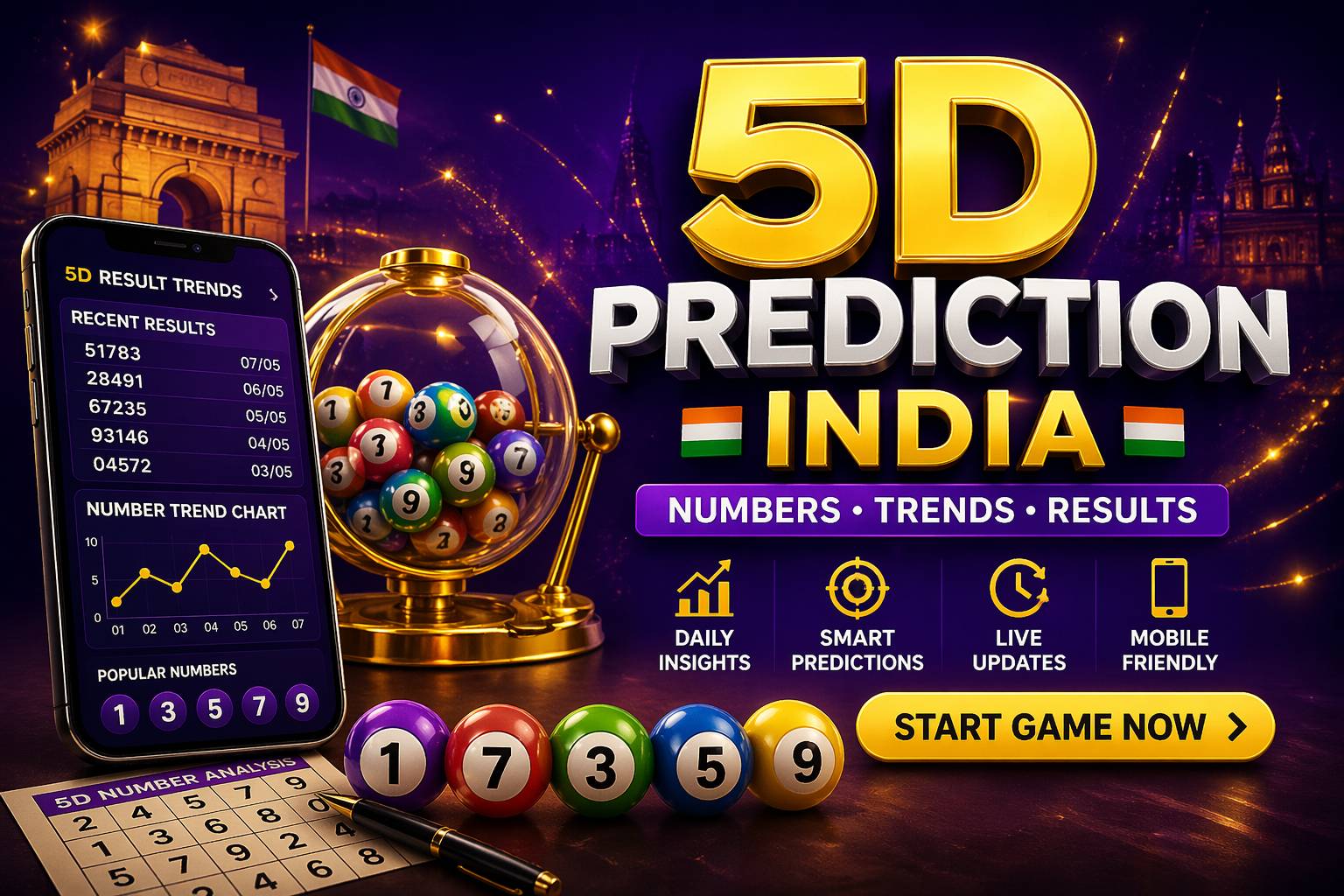
Daily observation is one of the most common habits among prediction followers. Rather than checking only once in a while, many users stay connected to recent results and continue updating their impressions over time.
This daily approach is useful because number behavior can feel different when viewed across several close result periods. A repeated ending may become obvious, a pair may look stronger, or a previously quiet digit may begin appearing more often.
Daily number observation also makes the experience feel more active. Users develop familiarity with the flow of results, which can make prediction content more meaningful and more engaging.
Users often move between prediction content, app access, payment-related information, and common questions as part of a broader lottery browsing experience. A connected set of pages helps create a smoother path from first interest to deeper exploration.
It refers to the observation of five-digit results, number trends, repeated combinations, and result movement over time. Users often follow it by comparing recent and historical number behavior.
Recent results help users understand the latest movement in number sequences. They provide a starting point for noticing repetition, change, and possible trend direction.
Not always. Many users also study pairs, triples, endings, center digits, and repeated number groups because these smaller parts can reveal patterns within larger results.
Charts make it easier to compare number appearance, repeated digits, missing sequences, and movement over time without relying only on long text lists.
Yes. Many Indian users prefer accessing prediction content on their phones because it allows them to review results, compare trends, and revisit number pages throughout the day.
Repeated endings are easy to track and compare. When they appear across multiple result periods, they often become one of the first patterns users notice.
Historical review helps users understand whether current number behavior fits into a longer pattern, shows a return, or marks a clear change from earlier results.
Yes. Daily review is common because users often want to compare recent results, monitor trend changes, and keep an eye on repeating number groups.
Group-based observation allows users to work with related pairs and triples instead of relying on only one exact number. This often creates a broader and more flexible way to read patterns.
A good homepage combines recent results, pattern discussion, number trend coverage, chart-style thinking, clear structure, and an easy path for users who want to keep exploring lottery-related pages.
For users who enjoy watching number movement, comparing result history, and exploring the wider pattern side of 5D lottery prediction, a well-structured homepage creates a much better experience. Keep following the numbers, review the latest patterns, and continue exploring the pages that matter most.
Start Game